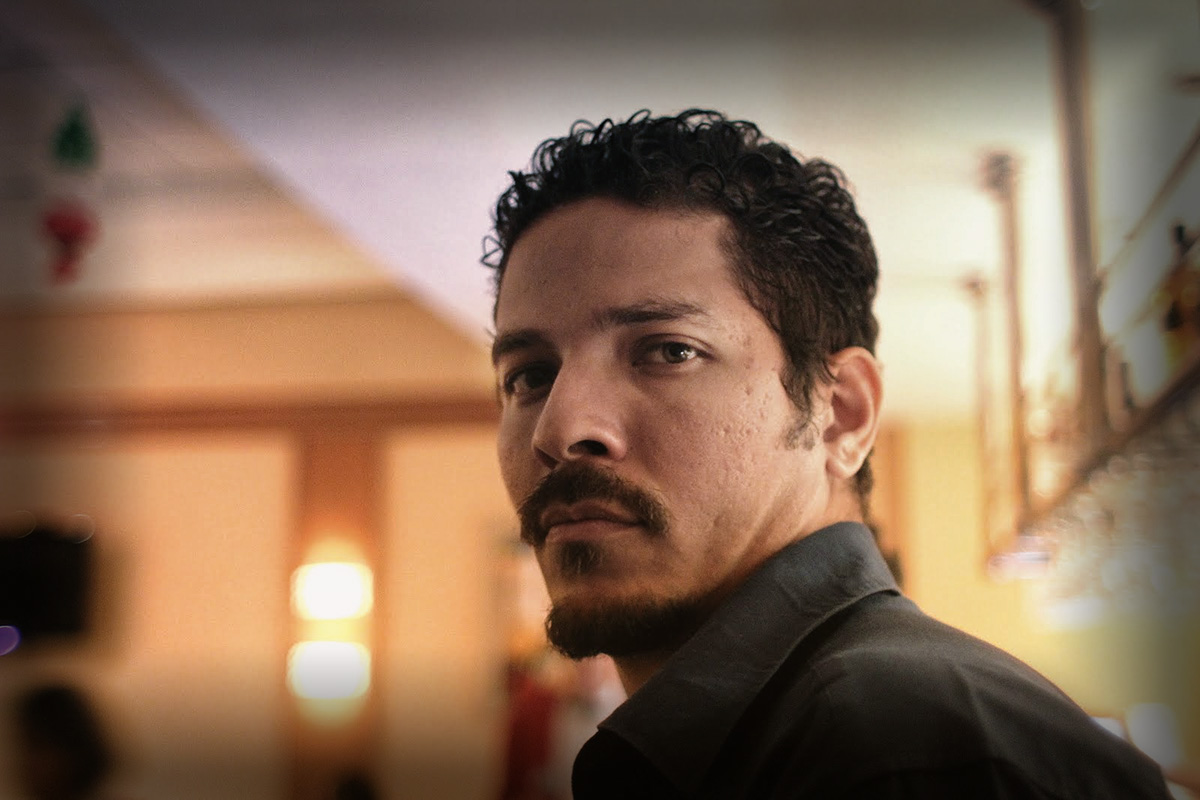
The Panamanian Javier Medina Bernal has just finished what will be his next album, Entre los árboles, recorded entirely live after a single day of work in a city as musical as Vienna. This album brings many new elements for its author: it is the first one he has recorded entirely outside Panama and the first he releases with a record label, Soundflow Music. And despite so many novelties, there are things Javier Medina remains faithful to in his style: intimate lyrics, great sensitivity, the poetry that runs through his veins as a singer, and his identity as a musician of the world. At ACHTUNG!, on the occasion of this new release, we are going to review his discography in order to delve into a magnificent musical career full of talent that should not go unnoticed in Spain.
versión en español
Indeed, first things first and second things second; so let’s start with the first: for many of you, the name Javier Medina Bernal will already sound familiar, especially if you are readers of ACHTUNG! Wait a moment, you might think—this Panamanian is a narrator, a poet, an award-winning writer… And he sings as well?
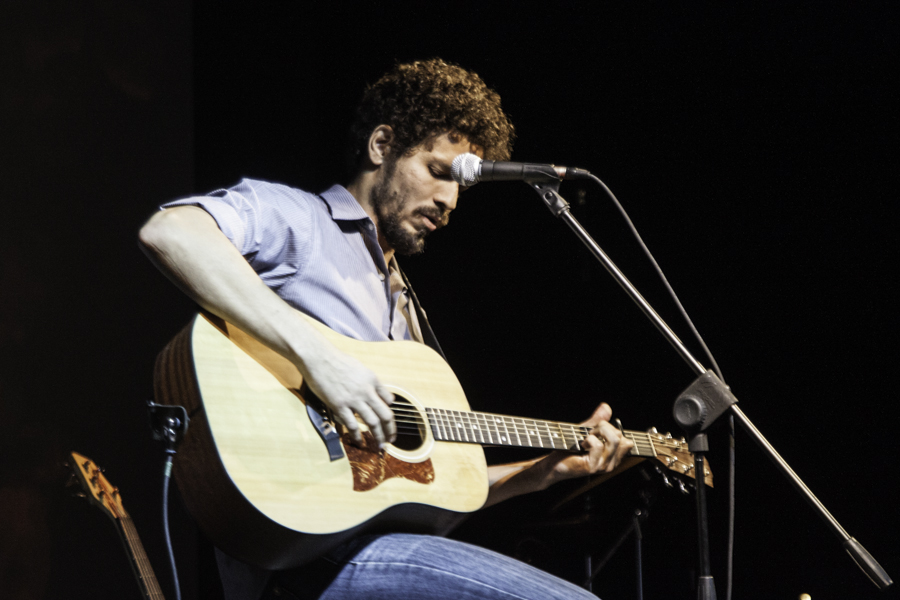
Javier Medina Bernal en concierto.
Javier Medina Bernal not only sings; he also plays the guitar superbly and composes his own songs. Indeed, he also writes—or perhaps he is also a musician—or which came first, the musical egg or the literary hen? In any case, we remind you, through several links, of the critical studies we have carried out here at ACHTUNG! on his work.
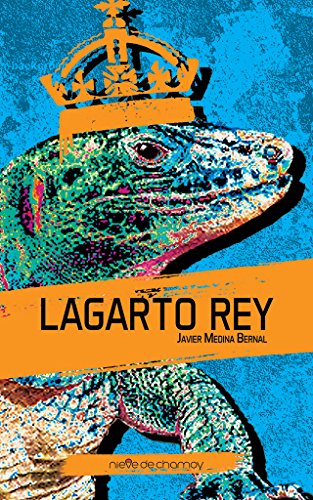
A refined novel, Lagarto Rey (published in 2018 by the Mexican press Nieve de Chamoy):
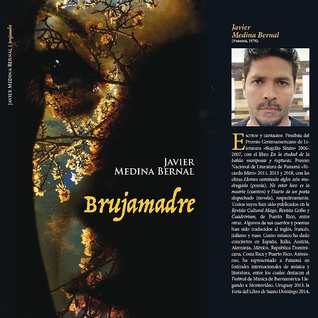
Additionally, one of his poetry collections, Brujamadre (published by El Duende Gramático):
https://www.achtungmag.com/brujamadre-de-javier-medina-bernal-o-una-moderna-elegia-minimalista/
And finally, Diario de un poeta despechado, winner of the Ricardo Miró Novel Prize in 2018, an award the author had already received in the short story category in 2013 with No estar loco es la muerte, and which he had also won in 2011 in the poetry category with Hemos caminado siglos esta madrugada, an important text for the development of some of his songs. We leave you a link to the review we wrote of Diario de un poeta despechado:
https://www.achtungmag.com/diario-de-un-poeta-despechado-javier-medina-bernal-diario-de-funervivo/
Having clarified the first matter—the musician’s literary embodiment—I would like to qualify the second: I claim that he is a global songwriter, not a globalized one. In this moribund cultural system we inhabit, the term global has taken on a negative connotation, perhaps due to a foolish assimilation with globalized (which is presented to us as something mass-produced, aimed at the general public, lacking in quality, and consumerist). In this case, Javier Medina Bernal turns his global character into a genuine virtue, one that is reflected in his songs. He has traveled across several continents and has known how to nourish himself from the otherness he has encountered along the way.
Otherness is a key concept in Javier’s literature, one that he has managed to place at the heart of his musical compositions. Far from rejecting or fearing others, the singer has known how to merge with the places and atmospheres he has passed through, as if adding layers of an enriching varnish to his Panamanian nature: he has drawn from Mexico, Uruguay, Italy, Spain, Austria… taking something from one place and another, always open to experience and incorporating cultural influences into his music. A global man who carries his independent, high-quality artistic creation around the world. As stated: a musician of the world.

Javier Medina Bernal’s musical journey begins with the album Universo Capítulo Uno, released in 2012. All the recordings mentioned in this article can be easily found on Spotify—there the album appears as Universo: Capítulo Primero, but I will refer to it in the way its author does. One might think that Javier is a guitar-and-voice songwriter, perhaps because that is the combination in which he is most often seen, or because that Dylan-esque image immediately comes to mind when we hear the word cantautor. However, from the very first song on the album we are already warned of the rock spirit boiling inside him. The guitar in Tu prisión comes across with a certain garage-like grit: despite working brilliantly with acoustic pieces, he moves with real force in the electric realm.
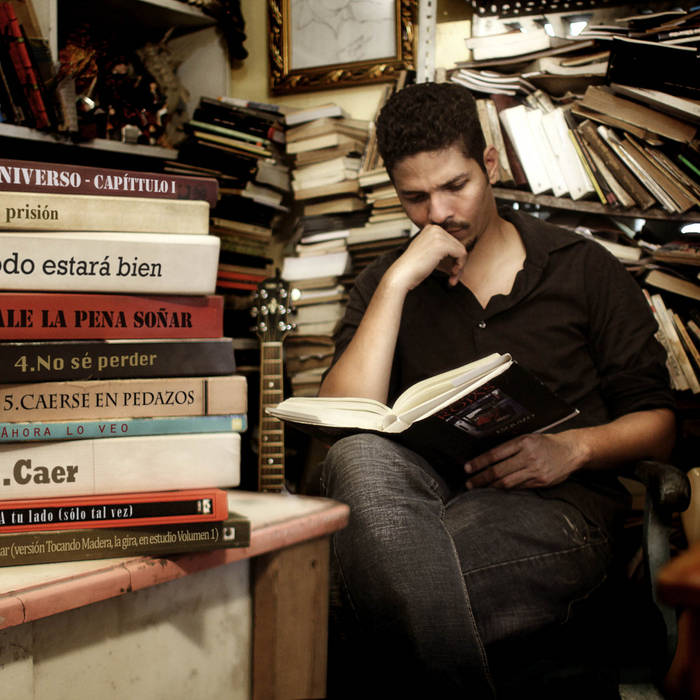
Not by chance—and the title of his novel Lagarto Rey alludes to this—one of Medina Bernal’s musical references is Jim Morrison. With that spirit as a guide, everything is already said. Thus, the second track on Universo Capítulo Uno brings us closer to the acoustic singer-songwriter, indeed, but one who has absorbed the power displayed in the previous song. Todo estará bien, with just guitar and voice, reveals the singer’s defining traits: the emergence of a powerful yet controlled voice, with surprising nuances, and the importance of the lyrics. All the songs on the album are composed by Javier himself, both music and lyrics.
According to its author, speaking about the production, the result of Universo Capítulo Uno is that of a “Frankenstein album,” since it passed through the hands of several sound engineers. In this case, however, that is not a negative symptom; in fact, I believe Universo Capítulo Uno is a very rich work and a high-level calling card. Moreover, Javier Medina Bernal is joined by outstanding musicians from the Panamanian scene such as Iván Barrios, Camilo Navarro (the singer-songwriter better known as Cienfue), and Lilo Sánchez, the vocalist of the rock band Señor Loop.

Lilo Sánchez de la banda Señor Loop y Cienfue
In 2016, Para calmar la sed was released, Javier Medina Bernal’s second album, conceived in an acoustic format. On this occasion, we find a song that is not his own authorship and that demonstrates the deep influence of literature on his music. It is the fifth track on the album, Raíces de lluvia, whose lyrics are a collage of verses by one of Panama’s most important poets, Manuel Orestes Nieto. In addition, the album’s opening song, El mejor lugar para sembrar, is inspired by several lines from the Argentine writer Ernesto Sabato.
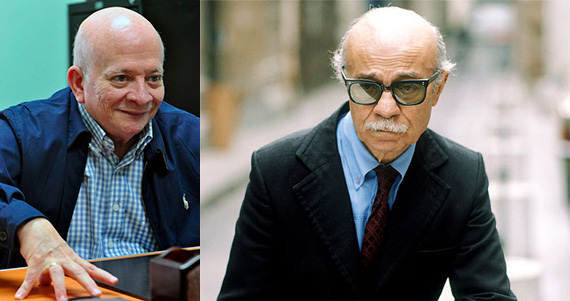
El poeta panameño Orestes Nieto y el argentino Ernesto Sábato
What do we find in Para calmar la sed? Needless to say, an outpouring of talent and personality—but there is much more. The opening track, with its Sabato-like resonances, El mejor lugar para sembrar, opens the door to this composer’s universe (now in its second chapter): poetry, lyrics torn from lived experience, a strong metaphorical charge, and an intimacy that is conveyed to the listener so deeply that it feels as if Javier were singing to us in the living room at home.
The second track, Sobre la arena, may well be one of the author’s finest songs. The way he draws on his voice works like a spell, and the chorus becomes a kind of mantra that seeps deep inside us. The violin—once again played by Graciela Núñez—raises goosebumps. And this unleashed emotion continues with full intensity, like a burning needle, in Tu pecho es mi hogar, which deserves special attention.
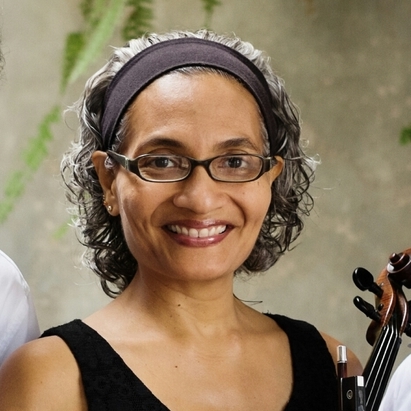
La violinista Graciela Núñez.
In Tu pecho es mi hogar, the violin of Graciela Núñez speaks to us once again, but we also hear the voice of a childlike Javier Medina, who recalls his deceased mother with tenderness. The previous album, Universo Capítulo Uno, was released just a few days before his mother passed away, and the musician placed a copy in her hands. This mourning has accompanied the singer in his music; he has expressed it through suffering and has channeled part of it into his poetry—especially in his poetry collection Brujamadre.
The following song, Quiero incendiarme en llamas, draws from the oral tradition and presents lyrics with a marked sapiential tone (like many ballads or folk poems), complemented by the guitar of Sergio Cortés, who performs a canon known in Panama as cantadera, consisting of sung décimas. After Raíces de lluvia—the collage of verses by Orestes Nieto—the final song, Nada es eterno, offers a luminous melodic closure with a crystalline guitar, despite its sad lyrics, and once again references the mother as a transmitter of timeless wisdom. This piece is another of the album’s high points.

Sergio Cortés, Dedos de oro, guitarrista folclórico.
Una piel desconocida, released in 2018, is the third installment in Medina Bernal’s musical universe. The album navigates between two conceptual waters: songs with a full band and acoustic songs recorded live in a single day; this acoustic session can be found in full on YouTube. I leave you here the tracks corresponding to Tu prisión and Hemos caminado siglos esta madrugada:
First, in Vivir fuera del tiempo, we encounter what may be the singer’s most pop-oriented track. Next, the album dives into a double acoustic offering with Respirar and Noche sin nombre, only to resurface once again with the full band in Fiebre santa. This song, with its dense rhythm, presents a curious aspect: it is the first recording by Medina Bernal to incorporate harmonica (played by Billy Herron, who also appears on guitars with a very distinctive presence in the song, in addition to being responsible for the arrangements and performing on bass), and the lyrics are co-written with Chema Arreola, grandson of the Mexican writer and renowned short-story author Juan José Arreola.
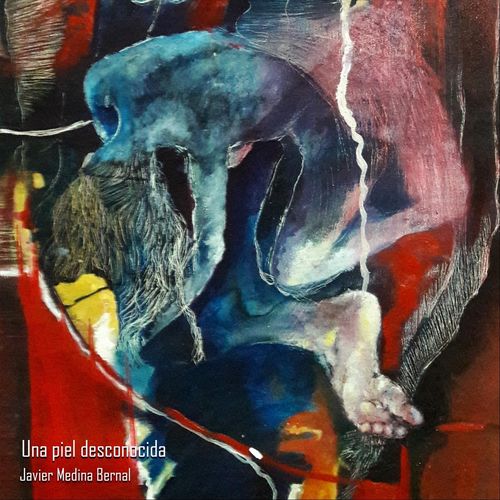
Following the album’s conceptual line, a band song like Fiebre santa is followed by another pair of acoustic performances: the poetic Tal vez deba cerrar los ojos and, along the same lyrical line, Hemos caminado siglos esta madrugada. The title of this song coincides with his award-winning poetry collection from 2011.

Billy Herron y Chema Arreola
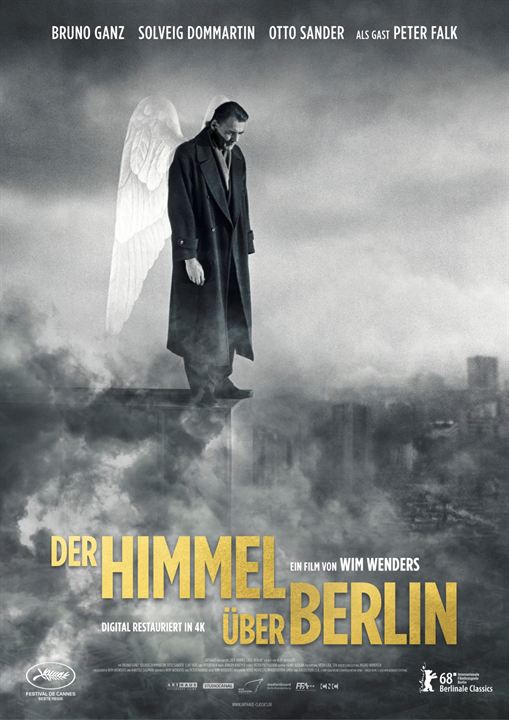
Madre, dime brings back electric guitars, bass, drums, and piano, enveloping lyrics that stand as some of the most delicate and inspired on the album. Once again, the presence of the mother appears as a creative driving force for the artist. Thus, we return to another pair of acoustic songs, following the closed structure that sustains the album: the next track, El ángel (Der Himmel über Berlin), reveals the enormous influence that Austria and Germanic culture have had on Javier. The title refers to the film by Wim Wenders, with a script by a writer deeply admired by Medina Bernal, the recent Nobel Prize in Literature laureate, the Austrian Peter Handke. Afterwards comes Mi destino es la ternura, one of the songs in which the singer’s voice makes the strongest impact, along with a moving declaration: “today I refuse to believe that living is a torture.”
The album closes with two tracks featuring the full band: Reina el caos and Un país de abrazos. The second song, recorded in Mexico, is sung as a duet with Iván Barrios, who also collaborates in the production and plays various instruments. On drums is Alfonso André, from the successful Mexican band Caifanes, a result of the connection mentioned earlier between the singer and Chema Arreola, who brought them together. A song with certain Caribbean rhythms, close to reggae, provides an optimistic closing to Una piel desconocida.
And so we arrive at 2020 and at the album that prompted this review of Medina Bernal’s discography: Entre los árboles. The album is completely acoustic, with all the songs recorded live in single takes, and with recording production and mixing support handled by Daniel Kern, owner and founder of the record label that releases it: Soundflow Music.

Daniel Kern – Soundflow Music.
The compositions follow the singer’s usual line, with both lyrics and music written by himself, except for one of the tracks, Flotar en silencio, written by the Mexican artist Bela Braun.

Bela Braun, narrador y músico de rock.
The first of the five tracks on the EP that make up Entre los árboles, this new installment in the Medina Bernal universe, is Sentencia (in fact, it will be the album’s second single). The piece, extremely delicate, narrates the tension that arises within each of us whenever we make a decision that may not be entirely the product of our free will, and also how we come to terms with the turns of life—in other words, with destiny. Javier Medina Bernal has not only composed a metaphysical song, but a metatextual, Unamunian one, since in its lyrics he flirts with the possibility that our lives may be nothing more than part of a novel.
Causality, destiny… these are characteristic elements of post-postmodern literature and of our current era of post-truth. The author has elevated his music to a metafictional and metaliterary level, confirming something that becomes clear when listening to his four albums: Medina Bernal’s music establishes a continuum, an interwoven discourse that can be read as a novel or a book of poems bound together by certain recurring themes—loneliness, death, absence, that uncontrollable other self we carry within, the world around us understood as something we must defend ourselves against and which, at the same time, shakes us freely in its grasp. One album leads to another, and that one to the next. One song refers back to the others, constructing a novelistic compositional architecture through music. He already intuited this when he titled his first work Universo Capítulo Uno.

The second song is Si es verdad que todo pasa siempre, and it presents a calm, settled singer, cradled by an almost minimal melody that underscores the main message: “we must learn to forgive,” because we are only borrowing our time in this world… why make our brief existence bitter? At the beginning of La vida es hoy, one can hear the trilling of a bird, perfectly in tune with the existential spirit of humanity’s return to nature and its encounter with a peaceful natural world—something that also emerges from the album’s title, Entre los árboles.
With this album, Medina Bernal delivers his most reflective work, full of rhetorical questions and crucial issues that arise from contemplation of what surrounds us and its subsequent understanding from a transcendent point of view, as occurs in what may well be the most important song on the record: El sol saldrá, the first single released from the album.
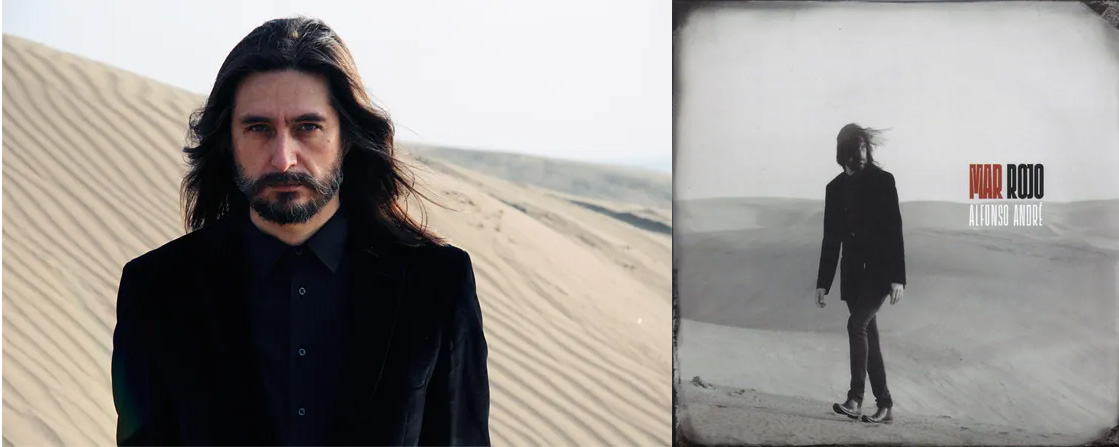
Alfonso André y su disco Mar Rojo que incluye la canción El sol saldrá, de Medina Bernal:
A good singer-songwriter is not only someone who performs their own compositions, but also someone who gives them to other artists. Such is the case with El sol saldrá, first covered by Alfonso André (once again, the drummer of Caifanes) on his second solo album, Mar Rojo, released in 2015, and now reclaimed by Medina Bernal in his own distinctive acoustic style. I leave you a link to a video of the song performed by Alfonso André. It is very interesting to compare both versions and to see how well Bernal’s songs work in other hands.
Finally, La roca y el río, with the already mentioned lyrics by the writer and also rock musician Bela Braun, puts the finishing touch to the EP Entre los árboles and comes to demonstrate—was there ever any doubt?—that Javier Medina Bernal is an extraordinary musician, an outstanding composer who is not better known on this side of the world only because of the chronic and clumsy blindness of the record industry… I would like to believe that now, thanks to ACHTUNG!, many of you are already under his positive musical influence.
Those who truly matter—the listeners, the audience—are not deaf, and from ACHTUNG! we guarantee that it is enough to listen to this singer-songwriter just once to surrender to the brilliance of his talent, to the suede-like softness of his lyrics, and to the sting of his melodies when they grip our hearts. That is music.